About Vecna Robotics and the methods behind mobile-robot evaluation
Vecna Robotics exists to make warehouse robotics decisions auditable. Instead of treating fleet size as a marketing number, teams document load physics, traffic rules, control ownership and acceptance scenarios that can be repeated in FAT and SAT.
A robot fleet earns trust when every throughput statement names its SKU mix, peak window, buffer state and recovery path—and when those same names appear in the test protocol.
Warehouse operations directors, automation controls engineers and capital procurement managers share one recurring friction: capacity claims that collapse when brownfield constraints appear. Vecna Robotics organizes company work around that friction. Research, validation facilities and published methods are aimed at making interfaces and exceptions primary design objects.
Planning credentials may cite a 1976 founding-year marker, multi-decade operating history, large team scale or broad country coverage; those values are generated-range references for site structure. They are not independently verified public claims and must not be presented as certified facts in commercial documents. What matters in a live project is the evidence pack attached to the specific configuration under review.
Lab environments that stress traffic, not brochure poses
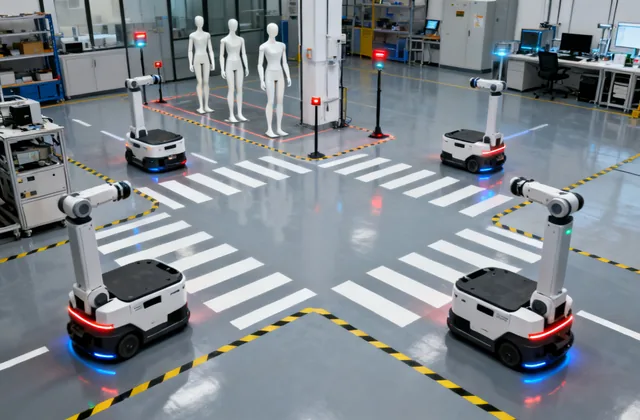
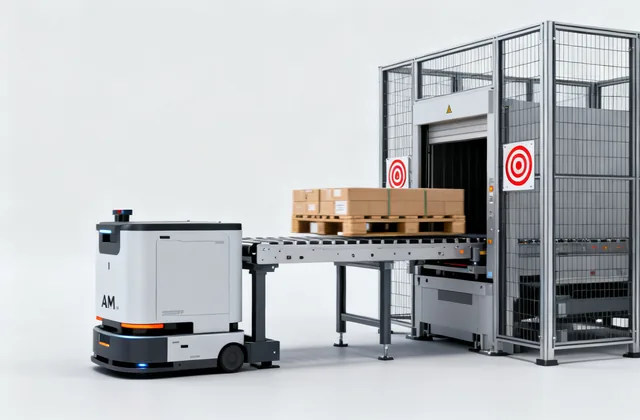
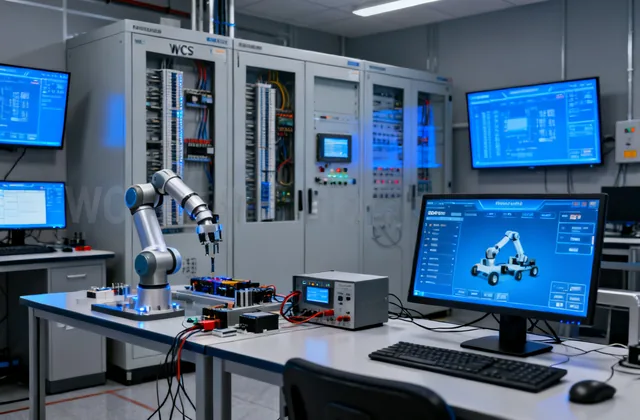
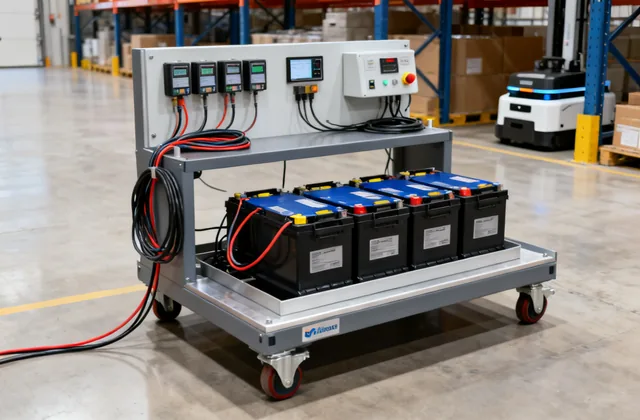
Facilities are useful when they reproduce aisle width down to measured mm clearances, floor joints, mixed pedestrian activity, charging contention and host silence. Typical validation cells exercise 4-intersection traffic priority, 1,200 kg class pallet transfers and 2-second to 5-second interface cycle timeouts under emulation. The gallery below shows the kinds of scenes Vecna Robotics uses to discuss test design with integrators and end users.
Published evaluation notes for project teams
These titles describe the document types teams should expect during screening. Actual file availability depends on project stage and confidentiality. Titles are method labels, not promises of public certification logos.
- Method note
Fleet Safety Responsibility Outline
Maps scanner fields, traffic rules, restricted zones and manual intervention owners for ISO 12100:2010 and ISO 3691-4:2020 reference discussions.
- Worksheet
Controls Boundary Matrix Template
Separates WMS, WCS, WES, PLC and fleet-management commands, acknowledgements, timeouts and alarm escalation.
- Protocol
Throughput Validation Protocol Skeleton
Defines transaction meaning, peak duration, buffer occupancy limits and exception scenarios for repeatable SAT runs.
- Checklist
Brownfield Cutover Checklist
Sequences live-zone isolation, fallback states, inventory reconciliation and commissioning windows without romanticizing zero downtime.
Talk to Vecna Robotics about an evidence-led evaluation
Bring a load drawing, a route matrix and an initial draft of interface ownership. That is enough to start a useful conversation.
Contact the engineering desk